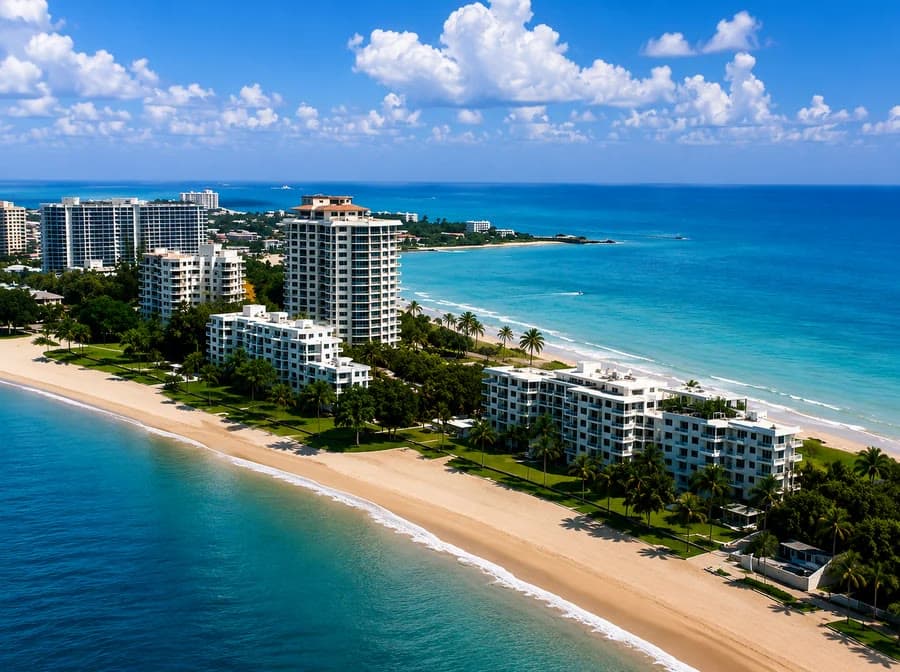
Flood Zones & Flood Insurance in Northern Palm Beach County
How FEMA maps, NFIP, and private flood insurance show up when you buy in Jupiter, Juno Beach, or Singer Island — and what to verify before you write an offer.
Educational Resource — Not a Rate Quote
This page explains the flood zone and flood insurance process for buyers in northern Palm Beach County. It is not a flood insurance quote, premium estimate, or determination of whether a specific property requires flood insurance. For property-specific guidance, consult a licensed insurance agent and your lender.
Buying near the water in Jupiter, Juno Beach, or Singer Island comes with more than square footage and view. Coastal diligence includes understanding flood zones, flood insurance requirements, and what documents to request before you commit to a purchase.
Flood zones and flood insurance aren't scary — they're part of the process. But they are property-specific, and understanding them early helps you make an informed decision and avoid surprises at closing.
I help my clients navigate these considerations on waterfront and coastal properties throughout northern Palm Beach County.
FEMA Flood Zones in Plain English
FEMA (Federal Emergency Management Agency) creates Flood Insurance Rate Maps (FIRMs) that designate flood zones based on flood risk. These maps are used to determine flood insurance requirements and rates.
Understanding your property's flood zone is an important part of buying coastal or waterfront real estate. Here's what the most common designations mean:
Zone AE
High-risk area. The property is in a Special Flood Hazard Area (SFHA) with a 1% annual chance of flooding (sometimes called the "100-year floodplain"). Base Flood Elevations (BFE) have been determined for this zone.
If you have a federally backed mortgage, flood insurance is required. Even without a mortgage, flood insurance may be a prudent decision.
Zone VE
High-risk coastal area with wave action. Like Zone AE, but with additional coastal wave hazards. Common on barrier islands and oceanfront properties.
Flood insurance is required if you have a federally backed mortgage. Building codes and elevation requirements may be more stringent in VE zones.
Zone X (or Shaded X)
Moderate-to-low risk area. The property is outside the Special Flood Hazard Area (SFHA). Flood insurance is typically not required by lenders.
However, flooding can still occur outside high-risk zones. Some buyers choose to purchase flood insurance even when it's not required, especially if they're close to water.
Flood zones are designations based on modeling and historical data — not guarantees. A property in Zone X can still flood, and a property in Zone AE may never experience flooding. The zones are used for insurance and planning purposes.
How to Look Up a Specific Address on the Official Flood Map
Before making an offer on a waterfront or coastal property, you should verify the property's flood zone designation on the official FEMA map. Here's how:
Steps to Check a Property's Flood Zone
- Visit the FEMA Flood Map Service Center: Go to msc.fema.gov
- Enter the property address in the search tool
- Review the flood zone designation (such as AE, VE, or X)
- Check if the property is in a Special Flood Hazard Area (SFHA)
- Note the Base Flood Elevation (BFE) if applicable
Your lender will also order an official flood zone determination during the mortgage process. This determination will confirm whether flood insurance is required and will be included in your closing documents.
Request an Elevation Certificate
If the property is in a Special Flood Hazard Area (SFHA), ask the seller for a copy of the elevation certificate. This document shows how high the structure is built relative to the Base Flood Elevation (BFE) and can affect your flood insurance premium. If the seller doesn't have one, a surveyor can prepare a new elevation certificate for a fee.
When Lenders Require Flood Insurance
If your property is located in a Special Flood Hazard Area (SFHA) — typically zones that start with A or V — and you have a federally backed mortgage, federal law requires you to purchase flood insurance.
Your lender will order a flood zone determination as part of the mortgage underwriting process. If the determination shows the property is in an SFHA, the lender will require proof of flood insurance before closing.
Cash Buyers & Flood Insurance
If you're paying cash and the property is not financed, flood insurance is not legally required — even if the property is in a high-risk flood zone. However, many cash buyers still choose to purchase flood insurance to protect their investment, especially on coastal and waterfront properties.
Even if flood insurance is not required, it's worth considering if the property is near the water, in a low-lying area, or has a history of flooding. Flood damage is not covered by standard homeowners insurance.
NFIP vs Private Flood Insurance (High Level)
When you need flood insurance, you typically have two options: the National Flood Insurance Program (NFIP) or private flood insurance. Both can satisfy lender requirements if your property is in a Special Flood Hazard Area.
National Flood Insurance Program (NFIP)
NFIP is a federal program administered by FEMA. Policies are issued through private insurance agents but backed by the federal government.
- Coverage limits are capped (currently $250,000 for the structure and $100,000 for contents for residential properties)
- Premiums are based on FEMA's rate structure and the property's flood zone, elevation, and building characteristics
- NFIP policies have a 30-day waiting period before coverage begins (plan ahead if you're closing soon)
Private Flood Insurance
Private flood insurance is offered by private insurance companies. It may offer higher coverage limits and different policy terms than NFIP.
- Coverage limits can exceed NFIP caps, which may be important for higher-value coastal properties
- Premiums, deductibles, and policy terms vary by insurer
- Some buyers find private flood insurance more affordable than NFIP for certain properties and flood zones
Which option is better?
It depends on your property, your coverage needs, and your budget. A licensed insurance agent can help you compare both NFIP and private flood insurance options and determine which one makes sense for your situation.
For more information about the National Flood Insurance Program, visit FloodSmart.gov. To purchase flood insurance or get a quote, contact a licensed Florida insurance agent.
Barrier-Island / Singer Island Diligence Notes
Barrier-island properties — including Singer Island, Juno Beach oceanfront, and Jupiter Inlet Colony — often come with different flood zone and insurance considerations than inland properties.
Many barrier-island condos and homes are located in higher-risk flood zones, such as VE zones (coastal areas with wave action). This can affect flood insurance premiums, building code requirements, and elevation standards.
What to Request on Barrier-Island Properties
- Flood zone designation on the FEMA map
- Elevation certificate (if the property is in a Special Flood Hazard Area)
- Flood insurance quote from a licensed agent
- Wind/hurricane insurance quote (separate from flood insurance)
- Condominium association master flood policy (if applicable) and what it covers
- Building compliance with current elevation and coastal construction standards
These are diligence steps — not risk labels. Barrier-island living is part of the lifestyle for many buyers in northern Palm Beach County. The goal is to understand the costs, insurance requirements, and building standards before you write an offer.
Buyer & Seller Checklists
Buyer Checklist — Before You Make an Offer
- Look up the property's flood zone on the FEMA Flood Map Service Center (msc.fema.gov)
- Request a copy of the elevation certificate from the seller (if the property is in a Special Flood Hazard Area)
- Obtain a flood insurance quote from a licensed insurance agent
- Obtain a wind/hurricane insurance quote (separate from flood insurance)
- If buying a condo, request the association's master flood insurance policy and determine what additional coverage you need
- Confirm with your lender whether flood insurance will be required and how much coverage is needed
- Factor flood insurance premiums into your monthly housing cost estimate
- Ask about any flood mitigation features (such as elevated construction, flood vents, or storm shutters)
Seller Checklist — Preparing to Sell a Waterfront or Coastal Property
- Locate your elevation certificate (if you have one) and provide a copy to prospective buyers
- If you have flood insurance, provide the buyer with your current policy information (premium amount, coverage limits, carrier)
- If the property is in a condo association, provide a copy of the master flood insurance policy to the buyer's agent
- Disclose any history of flooding, flood damage, or flood insurance claims on the seller's disclosure form
- If you've made improvements to reduce flood risk (such as elevating the structure or installing flood vents), document them and provide that information to buyers
- Work with your listing agent to address buyer questions about flood zones, insurance, and coastal living early in the process
Frequently Asked Questions
What is a FEMA flood zone (and what AE / VE / X mean in plain English)?
FEMA flood zones are designations on Flood Insurance Rate Maps (FIRMs) that indicate the level of flood risk for a specific parcel. Zone AE means the area is in a Special Flood Hazard Area (SFHA) with a 1% annual chance of flooding (often called the "100-year floodplain"), and Base Flood Elevations (BFE) have been determined. Zone VE is also a high-risk coastal area with wave action. Zone X means the property is outside the SFHA and is considered lower risk. These are planning and insurance designations — not guarantees that flooding will or won't occur. Always check the official FEMA map for a specific address.
How do I look up a specific address on the official flood map?
Visit the FEMA Flood Map Service Center at msc.fema.gov and enter the property address. The map will show the flood zone designation, whether the property is in a Special Flood Hazard Area (SFHA), and the Base Flood Elevation (BFE) if applicable. This is the official source for flood zone determinations. Your lender will also order a flood zone determination as part of the mortgage process.
Is flood insurance required if my lender says I'm in a Special Flood Hazard Area?
Yes. If your property is in a Special Flood Hazard Area (SFHA) — typically zones that start with A or V — and you have a federally backed mortgage, federal law requires you to purchase flood insurance. The lender will order a flood zone determination during the mortgage process and require proof of coverage before closing. Even if flood insurance is not required, it may still be a prudent purchase depending on the property's location and flood risk.
What's the difference between NFIP and private flood insurance (high level)?
The National Flood Insurance Program (NFIP) is a federal program administered by FEMA that offers flood insurance policies. Private flood insurance is offered by private insurance companies. Both can meet lender requirements if the property is in a Special Flood Hazard Area. Coverage limits, premium costs, deductibles, and policy terms can differ between NFIP and private options. A licensed insurance agent can help you compare both and determine which option fits your situation and property.
Does Singer Island / barrier-island living change what buyers should diligence?
Barrier-island properties — including Singer Island, Juno Beach oceanfront, and Jupiter Inlet Colony — may be in higher-risk flood zones (such as VE zones with wave action) and face different insurance, elevation, and building code considerations than inland properties. Request the elevation certificate, confirm the flood zone designation on the FEMA map, obtain flood and wind insurance quotes early, and review the condominium association's master flood policy if applicable. These steps apply to any coastal property, but barrier-island locations often require closer attention to flood risk and insurance costs.
Is this page a flood-insurance quote?
No. This page is educational only. Flood insurance quotes, premium calculations, and coverage recommendations must come from a licensed insurance agent or broker. Flood insurance costs are property-specific and depend on the flood zone, elevation, building characteristics, coverage amount, deductible, and other factors. For insurance guidance, consult a licensed Florida insurance professional. For mortgage and flood insurance requirements, consult your lender.
Ready to Explore Coastal Properties?
Whether you're considering waterfront, coastal, or barrier-island living in northern Palm Beach County, I can help you navigate the flood zone and insurance process and find the right property for you.
Explore Related Resources
Tracey Joiner, REALTOR®
Florida License #SL3302589 | KW Reserve